Explore all 42 countries
Opening hours, prices and tickets for places worth your time.
Hvar Cathedral, dedicated to St. Stephen, closes the eastern end of St. Stephen's Square on the site of a 6th-century church and a later Benedictine convent. The three-aisled church combines Renaissance, Mannerist and early Baroque forms beside a 17th-century bell tower; inside are parts of a 14th-century Gothic church and a 15th-century pulpit.
Official site
Open now · 20:00
The Royal Castle stands on Przemysł Hill above the Old Market Square, where Duke Przemysł I began a castle in 1249. Destroyed in 1945, its main building was reconstructed in 2010–2013 and now houses the Museum of Applied Arts, with about 2,000 objects from furniture and glass to arms and dress, and a viewing terrace in the tower.
Official site
The Burgtheater is Austria's national theatre and stages German-language drama on the Ringstrasse, opposite the City Hall. Its Neo-Renaissance building was designed by Gottfried Semper and Carl von Hasenauer and opened in 1888; Gustav and Ernst Klimt and Franz Matsch painted the ceilings of its two grand staircases.
Official site
historic building · Lindau The Old Town Hall stands on Lindau's Bismarckplatz, built in Gothic style from 1422 to 1436 and given a stepped Renaissance gable in 1576. Its south front carries large 19th-century murals of scenes from Lindau's history, repainted in the 1970s. The council chamber inside hosted a Reichstag in 1496 and is still used for city business, so it stays closed to visitors.
Free entryNo ticket needed
Open now · 17:30
Jungle Park is a zoo and botanical park in Arona in the south of Tenerife, formerly called Parque Las Águilas and run by the Aspro group. Paths with tunnels, suspension bridges, waterfalls and caves wind through about 7.5 hectares of planted grounds. It keeps more than 500 animals, including big cats, primates, sea lions and many birds, and stages bird-of-prey flight shows.
Official siteTickets available
Open now · 18:00
The Trade Fair Palace in Holešovice is the largest venue of the National Gallery Prague. Built in 1925–1928 to designs by Josef Fuchs and Oldřich Tyl, it was the first large functionalist building in Prague. After a fire in 1974 it was rebuilt for the gallery and shows Czech and international art of the 19th to 21st centuries.
Official site
Open now · 17:00
Wrocław Cathedral, dedicated to St John the Baptist, is a brick Gothic basilica built in the 13th and 14th centuries on Ostrów Tumski, the oldest part of the city, on the site of three earlier churches. Its two towers are 98 m high and one has a viewing terrace; inside are Baroque chapels and the silver high altar of 1591.
Free entryNo ticket needed
Open now · 17:00
Kraków Gate is a Gothic gate tower of Lublin's town walls, built after the Tatar raid of 1341 under King Casimir III the Great. Further storeys were added up to the 18th century, including an octagonal top with a Baroque cupola from 1782. Since 1979 it has housed the Museum of the History of the City of Lublin.
Official site
religious building · Hvar The Franciscan monastery stands on a small peninsula at the eastern edge of Hvar town, begun in the late 15th century on the site of a chapel of the Holy Cross. Its church has a lunette statue of the Virgin by Nikola Firentinac and the tomb of the poet Hanibal Lucić; the refectory holds a Last Supper by Matteo Ponzoni.
Official site
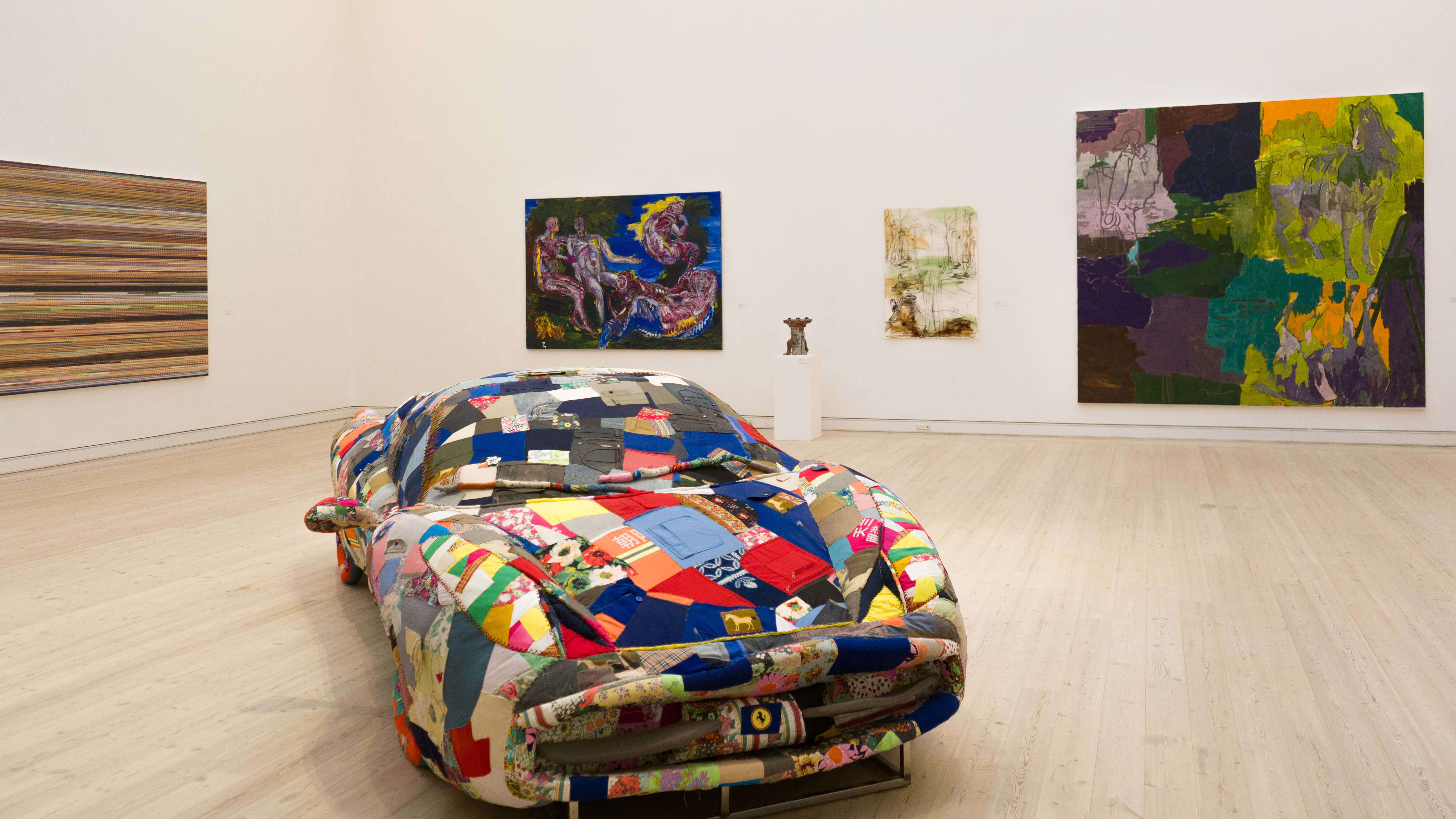
Museum of Danish art since 1900, strongest in experimental work after 1980, holding the largest collection of Michael Kvium, with a sculpture park.
Info only
historic building · Singapore Raffles Hotel is a working hotel on Beach Road, opened in 1887 by the Armenian Sarkies brothers and a national monument since 1987. Visitors who are not guests can see the white colonial façade and driveway, walk the shopping arcade and visit the Long Bar, where the Singapore Sling cocktail was first mixed.
Free entryNo ticket needed
tourist attraction · Bandung Kawah Putih is a crater lake on Mount Patuha near Ciwidey, south of Bandung, at about 2,430 metres above sea level. Its highly acidic water shifts between pale turquoise, whitish green and brown with the sulphur content, and the surrounding sand and rocks are bleached white. The site has been open to visitors since 1987.
Official site
Open now · 17:00
Mainz Cathedral was begun around 975 under Archbishop Willigis and largely completed by 1036 after a fire on its 1009 dedication day. Built mainly in Romanesque style with later Gothic chapels, the red sandstone cathedral is dedicated to St Martin and ranks among the three Kaiserdome of the Holy Roman Empire.
Free entryNo ticket needed
Santa Gadea, officially the Church of Santa Águeda, is a small single-nave church a few steps from the cathedral. Tradition places here the oath El Cid made King Alfonso VI swear that he had no part in the death of his brother Sancho II. The present building is later, from the 14th to 17th centuries, and a plaque by the door recalls the event.
Free entryNo ticket needed
Open now · 17:30
The Chalet of the Countess of Edla stands in the western part of the Park of Pena above Sintra. King Ferdinand II and the opera singer Elise Hensler, Countess of Edla, built it in 1864–1869 in the style of an Alpine chalet, with cork trim and a fern garden; damaged by fire in 1999, it reopened in 2011 after restoration.
Official site
Closed now
Church of Saint John the Baptist in Waalwijk, in North Brabant.
Official siteTickets available
Open now · 17:30
St. Rumbold's Cathedral is the metropolitan cathedral of the Archdiocese of Mechelen-Brussels, begun shortly after 1200 and consecrated in 1312. Its unfinished tower, built from 1452 to 1520, is 97 metres high and part of the UNESCO-listed Belfries of Belgium and France; inside are Anthony van Dyck's Crucifixion and a high altar by Lucas Faydherbe.
Free entryNo ticket needed
Open now · 18:00
The Belfry of Mons is an 87-metre Baroque tower built from 1662 to 1669 to designs by Louis Ledoux, in the castle park at the top of the town. It is the only Baroque belfry in Belgium, part of the UNESCO-listed Belfries of Belgium and France, and holds a 49-bell carillon; visits start at the Maison des Patrimoines UNESCO at its foot.
Official site
The Dom Luís I Bridge is a double-deck iron arch bridge over the Douro between Porto and Vila Nova de Gaia, designed by Théophile Seyrig and built by the Belgian Société de Willebroek. Its 172-metre arch opened in 1886; the upper deck now carries Metro line D and pedestrians, and the lower deck links the Ribeira quay with the Gaia waterfront.
Free entryNo ticket needed
Closed now
The Citadella is the fortress on top of Gellért Hill, built by the Habsburg army in 1851–1854 after the 1848–49 revolution, beside the Liberty Statue of 1947. After a renovation it reopened in 2026: the park, the walkway on the walls and lookout terraces are open to all, and the western gun tower holds the exhibition The Bastion of Freedom.
Official site
Show more (5699 left)